In the article, I highlight two Living Buildings now under development in the Northwest U.S. — one of them, the Oregon Sustainability Center, is shown here.
Here’s one tidbit about the Living Building standards — the Imperatives set very strict standards about how far building materials and even services can be transported to a project site. The standards specify that consultants can’t come from farther away than 2,500 kilometers!
The write-up extracts the essence from a report by the United Nations Environmental Programme (UNEP). The authors lay out the basic argument and data for decoupling. The report’s authors believe that innovation is the answer:
Innovation now needs to be harnessed for resource productivity and environmental restoration… innovations that contribute to decoupling through reducing environmental pressure and contributing to sustainability during economic activities.
Over at ThomasNet Green & Clean, I’ve posted “Is an ‘Energy Internet’ Emerging?” I’ve included some insights from networking pioneer Bob Metcalfe, also Thomas L. Friedman and Jeremy Rifkin, as well as my own thinking about the increasingly networked energy grid.
In an email conversation, Metcalfe acknowledged to me that “energy can be viewed as a thermodynamics problem or a government policy problem,” but he thinks that ultimately “it’s best instead to view energy as a networking problem.”
In a presentation, he gives a bit of history:
“While building Internet 1.0, the Arpanet,” during the 1970s, Metcalfe says in his presentation, “I remember this clearly, we did not say that our goal was YouTube.” And yet, “video is most of what the Internet now carries.”
This chart from XKCD shows the ionizing radiation you might absorb from various sources according to the standard sievert (Sv) measurement unit.
The interesting thing about this chart is it allows you to compare radiation absorption of a wide range of activities from the smallest risk, sleeping next to another person (tiny risk); to something greater but not really that bad in the end, such as being 50 km away from the Fukushima site in Japan; to something catastrophic, like being next to the Chernobyl reactor core after its explosion and meltdown. The chart helps you to understand where a fatal radiation dose stands within that great range.
XKCD gives a disclaimer that the chart probably contains mistakes and warns that “if you’re basing radiation safety procedures on an internet PNG image and things go wrong, you have no one to blame but yourself.”
The following image is linked from the original — click on it to inspect the original at full size.
An interesting study, soon to appear in the Journal of Risk Research, by Yale law professor Dan M. Kahan and colleagues, suggests that people tend to disbelieve scientists whose cultural values are different than theirs.
I’m not able to determine when this study will be published, but you can find an abstract at this link, and I was able to download a preliminary version of the whole article in PDF by clicking on the link on that page that says “One-Click Download.”
We know from previous research that people with individualistic values, who have a strong attachment to commerce and industry, tend to be skeptical of claimed environmental risks, while people with egalitarian values, who resent economic inequality, tend to believe that commerce and industry harms the environment.
Kahan and colleagues based their study on the theory of the cultural cognition of risk. In his paper, Kahan says this theory “posits a collection of psychological mechanisms that dispose individuals selectively to credit or dismiss evidence of risk in patterns that fit values they share with others.”
The researchers surveyed a representative sample of 1,500 U.S. adults. They divided this sample into groups with opposite cultural worldviews, some favoring hierarchy and individualism, the others favoring egalitarianism and communitarianism.
They surveyed the respondents to determine their beliefs about what in fact is the scientific consensus on issues of climate change, disposal of nuclear waste, and concealed handguns, with particular focus on the associated levels of risk in each of those areas. Various statements were attributed to fictional personas portrayed as authors of books on these various issues. Respondents were asked to judge whether each author is really an expert or not.
Analysis of the results on the climate-change issue revealed that:
Disagreement was sharp among individuals identified (through median splits along both dimensions of cultural worldview) as “hierarchical individualists,” on the one hand, and “egalitarian communitarians,” on the other. Solid majorities of egalitarian communitarians perceived that most expert scientists agree that global warming is occurring (78%) and that it has an anthropogenic source (68%). In contrast, 56% of hierarchical individualists believe that scientists are divided, and another 25% (as opposed to 2% for egalitarian communitarians) that most expert scientists disagree that global temperatures are increas-ing. Likewise, a majority of hierarchical individualists, 55%, believed that most expert scientists are divided on whether humans are causing global warming, with another 32% perceiving that most expert scientists disagree with this conclusion.
The study revealed similar results around the issues of geologic isolation of nuclear wastes and concealed-carry laws.
So should we conclude that people are going to believe what they want to believe, and that’s all there is to it? The authors make an interesting statement about the implications for public presentation of scientific findings:
It is not enough to assure that scientifically sound information — including evidence of what scientists themselves believe — is widely disseminated: cultural cognition strongly motivates individuals — of all worldviews — to recognize such information as sound in a selective pattern that reinforces their cultural predispositions. To overcome this effect, communicators must attend to the cultural meaning as well as the scientific content of information.
The report suggests some ways that cultural meaning might be considered in communicating with the public. One such strategy is what the authors call narrative framing:
Individuals tend to assimilate information by fitting it to pre-existing narrative templates or schemes that invest the information with meaning. The elements of these narrative templates — the identity of the stock heroes and villains, the nature of their dramatic struggles, and the moral stakes of their engagement with one another — vary in identifiable and recurring ways across cultural groups. By crafting messages to evoke narrative templates that are culturally congenial to target audiences, risk communicators can help to assure that the content of the information they are imparting receives considered attention across diverse cultural groups.
The Raleigh News & Observer carried a story today about a new survey by the Wake County Environmental Services department about roadside littering in the county. (See “Wake is surveying our littering habits.”)
I confess that littering is a big pet peeve for me. It’s hard for me to conceive how anybody could think it doesn’t matter if they throw trash on the ground.
A news release from the county says the survey will study “the attitudes and perception of littering among Wake County citizens.” Survey questions focus on “awareness of litter; perceived location of, and problems associated with litter; personal experience with littering; perceptions of causes of littering and willingness to participate in voluntary litter-cleaning programs.” The results will be used in the development of an anti-litter awareness campaign. (See “Wake Conducts Roadside Litter Survey.”)
Yesterday I reviewed an informative presentation by John P. Abraham, associate professor in the school of engineering of St. Thomas University in Minnesota. In his presentation, “A Scientist Replies to Christopher Monckton,” Abraham offers a point-by-point rebuttal/refutation of claims made in a presentation he attended by Christopher Monckton, in which Monckton presented arguments against anthropogenic (man-made) global warming (AGW), that is, the idea that human activity is causing an increase in global temperatures resulting in dangerous climate change.
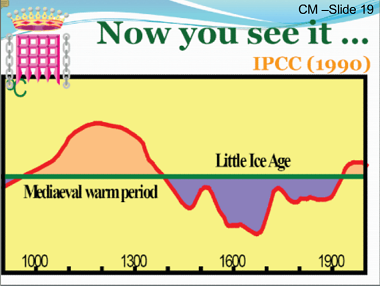
Monckton is Chief Policy Adviser at the Science and Public Policy Institute (SPPI) and is well-known as a critic of anthropogenic global warming. (See one of Monckton’s slides referenced by Abraham, to right.)
Though long (it’s a 73-minute Flash presentation with voiceover), Abraham’s critique of Monckton is well worth reviewing, especially if you’ve been wondering about the emerging criticism of AGW and the general scientific consensus on climate change.
[Update added 16 July 2010]: A reader (see his comment below) has kindly pointed me to Monckton’s response to Abraham’s presentation. This is in PDF format and is very long — his answer is in the form of a series of questions (500 of them). See “Response to John Abraham, by Christopher Monckton.”
I have to say that, although I tend to agree with the consensus position in this case, just because most or even all of the experts in a certain field believe the same way, I don’t think others should be obligated to follow the crowd. And those who do accept the consensus point of view should be willing to keep their convictions on the table and to re-examine matters when new information becomes available.
To say that those who question claims of climate-change are “anti-science” or to call them “deniers” (as if their challenges were somehow akin to denials of the Holocaust) is disingenuous and counter-productive. It gets people arguing about all the wrong things, instead of communicating and working on problems.
In the case of the challenges to the climate-change consensus, science itself is not being called into question. The real issues have to do with things like politics, public policy, economic philosophy, and ideology. If people’s livelihoods and the well-being of their descendants are in play, isn’t it reasonable to allow them to call into question the conclusions and policy implications of those who evoke climate science as justification for their policy recommendations?
Also, it’s reasonable to point out that scientists themselves are humans with their own foibles, and while for the most part they might believe they are carrying out their work according to well-established principles and sound procedures, some of them have shown themselves to be influenced by self-interest, greed, and ideological leanings. So if their work is financed with public resources and being used to influence policy, isn’t it reasonable to expect their work – and especially their statements about its implications – to stand up to public scrutiny?
If researchers and institutions are convinced that anthropogenic global warming is a real danger, then it would behoove them to find ways to present the evidence in an accessible way, rather than just sticking their noses in the air and spouting arrogant put-downs of those that raise questions.
That brings me to the value of John P. Abraham’s presentation.
I found Abraham’s presentation reasonable and level-headed (see one of his slides to right). He refrains from personal attacks. Abraham analyzes Monckton’s scientific references, charts, and assertions in detail. Where available, he examines the data sources for Monckton’s charts and the papers he references. He even wrote to the authors of many of the original papers to ask for clarification when needed and shows their replies in his presentation.
Abraham’s presentation is really produced as a point-by-point refutation of Monckton, but along the way you learn a lot about climate change and the associated data. Pretty easy to follow, for a non-specialist reader with a fair understanding of science.
“My goal,” he says, “is to show people how they can learn about the scientific understanding on their own.”
The questions he addresses include:
Has Al Gore really overestimated the future sea-level rise by 100 times, and is it really true that sea levels are not rising?
Are polar bears in the Canadian Beaufort Sea really endangered by warming temperatures or not?
Was there a medieval warming period comparable to that taking place today, and did the IPCC “erase” that medieval warming period from its historical climate data?
Do IPCC’s climate sensitivity estimates really rest on just 4 scientific papers, rather than 2,500?
Have average temperatures actually been going down, contradicting IPCC projections?
Is there really no evidence for any catastrophic effects of anthropogenic climate change anywhere in the world?
Is it really true that increase in CO2 levels is an effect of warming rather than a cause, and is it really true that CO2’s effect on global temperature is negligible?
Is the extent of arctic sea ice actually remaining steady rather than declining?
Has the Greenland ice sheet really been increasing rather than decreasing?
Is it really true that the Himalayan glaciers have not been retreating?
Is it really true that oceans are not heating up?
Is it really true that global warming is caused by increased solar activity, rather than human activities?
Sickening as it is, the unfolding oil disaster due to the runaway gusher in the Gulf of Mexico (the terms “leak” and “spill” hardly seem adequate) is giving rise to a flurry of innovations in oil cleanup that should result in more effective responses to such crises in the future.
Watching BP and the federal government flounder around these first several weeks of the disaster, many individuals, small businesses, and local officials in the Gulf region have stepped forward with cleanup solutions, some sophisticated and well-thought-out, some not so much (see “Battling oil with ‘Cajun ingenuity.’” But the point I’m making is that it’s interesting to see how a crisis like this is useful as a stimulus for innovation.
I’ve been able to dig up a few CNN reports that show examples.
I was particularly struck by a report just today about two boatmakers who have quickly generated a kind of floating “M*A*S*H” facility for cleaning up oiled birds. The unit is based on the design of shallow-draft fishing boats that can easily maneuver in coastal waters and marshlands. Birds can be picked up, cleaned, and released right from the boat, without the time-consuming process of taking them into land-based facilities. (See “Boatmakers: Oil officials ignoring bird-saving boats“)
As is often experienced by innovators within large companies and organizations, the two Alabama boatmakers, Mark Castlow and Jimbo Meador, have run into problems getting uptake of their innovation by the large bureaucratic entities running cleanup efforts.
CNN made calls to find out why the solution has not been exploited by BP and the government. The CNN journalist says that, “The unified command center admitted that juggling all the offers of help has been a problem.”
One of the boatmakers says, “It’s one of the most frustrating things I’ve ever been involved in.” So far, they have been able to produce a prototype boat with funds from private donors, including musician Jimmy Buffet. From here on out, they plan to produce a new boat every seven days.
When I heard that actor Kevin Costner was getting involved in cleanup efforts, my first reaction was, “Oh, ha-ha, he should get together with Brad Pitt and George Clooney, ha-ha!” But thanks again to CNN, I have learned that, in reality, Costner and his colleagues at their company, Ocean Therapy Solutions, are actually selling BP a cleanup device that he and his brother, a scientist, developed during the early 1990s.
Costner’s machine is a device for separating oil from water. His largest machine has about a 5′ x 5′ footprint, weighs about 4,000 pounds, and can separate 200 gallons of liquid a minute, separating oil and water at 99.9 percent purity on either side.
Costner brought the machine to market over a decade ago, but couldn’t raise any interest until the current crisis. “I guess people just thought spills were over,” he tells Anderson Cooper of CNN. But to the contrary, he says, “Spills occur on a daily basis. Someone said enough oil spills on a daily basis that every seven months we’re having an Exxon Valdez out there. It’s just, out-of-mind, out-of-sight. It takes something like this to happen, where now we’re all pointed at it.”
Costner took his product for years to government agencies and private industry with no success, but now BP has ordered 32 of the devices. Costner tells CNN, “I’ve had to be kind of silent the past few weeks as this machine was put through a lot of hoops, and it just passed everything that BP could throw at it.” (See Cooper’s video interview with Costner, “Kevin Costner’s solution to oil spill.” See also Ocean Therapy’s news release, “BP to Proceed With Costner Centrifuge Devices to Cleanup Gulf Oil Spill.”)
What should companies be doing to prevent disasters such as the ongoing catastrophe in the Gulf of Mexico, with its tragic loss of life and environmental devastation? Granted, some disasters are just ‘Black Swans’ (see Nassim Nicholas Taleb’s writings on this topic) and can’t be predicted. But company safety procedures can go a long way toward mitigating the risks of accidents and their potential effects.
Having served as a company safety officer and having written about industrial safety some years ago, I was very interested in the experience published today by Robert X. Cringely on his I, Cringely blog — see “Doing the Right Thing.”
Cringely republishes a comment from one of his readers, a Monsanto engineer, who recounts how Monsanto learned from the calamitous April 16, 1947, industrial accident at Texas City harbor. That accident was caused by a fire on a ship, not by Monsanto. However, the resulting explosion destroyed Monsanto’s plant, along with other facilities at the port and thousands of homes. Almost 600 people were killed. (See the Wikipedia article on the Texas City Disaster and the series of photos at the Portal to Texas History.) Here’s an aerial view of the Monsanto plant and the port after the accident:
As a result of Texas City, Monsanto developed a stronger culture of safety, says Cringely’s reader:
They developed technology to better control chemical process. They developed standards to built safer facilities. They didn’t do this alone. They worked closely with other chemical companies. The whole industry invested in best practices and shared what they learned. When I started my job [in the 1970s] I was given a set of “standards” consisting of 3 binders, each 6 inches thick — serious reading.
Union Carbide’s terrible accident in Bhobal, India, in 1984 also became a crucial lesson for industry players. Soon after Bhopal, Monsanto officials had “reverse-engineered” the disaster and reiterated company policy, emphasizing that “all plants are to be built to USA or local country safety standards, whichever is better.”
Further studies within Monsanto after Bhopal had a profound effect on the company’s business:
The result of the study was sweeping changes in how much material was stored in each facility. Many processes and lines of business were deemed too risky to continue and were shut down. Monsanto walked away from tens of millions in business to reduce risk and improve safety.
Monsanto also instituted new programs to train and equip local first-responders where its plants are and to reduce emissions “far exceeding EPA rules.”
These comments emphasize the value of adopting the stance of a “learning organization.” What kinds of company policies and practices can go the furthest in preventing accidents, loss of life, and environmental damage — and in minimizing the effects when accidents do occur?
A conversation earlier today with some of the innovation folks at IBM about their Smarter Planet initiative has got me revisiting some research we’ve done at the ILO Institute on a concept know as the “Internet of Things.” The essential idea is that objects in the physical environment around us are increasingly being embedded with networked technology, interacting with the larger network, and creating data. In fact, a video by IBM (shown below) suggests that there already might be more objects connected to the Internet than people.
I first encountered the Internet of Things concept in 2006 working on a report on the future of RFID (radio-frequency identification). RFID is a technology used to embed miniature wireless communications in objects of all kinds, such as packaging, boxes, equipment — even humans and animals. At that time I was in touch with some people working on the Internet of Things concept at MIT.
On a product level, says Murray, each item would be tagged by “a sort of Web page for each item” coded in HTML. “Thus, all products could be identified anywhere, instantly.” Plans include migrating from sticky tags to RFID devices embedded in cardboard cartons during the manufacturing process.
Murray speaks of this emerging Internet of Things in terms of the supply chain. However, the eventual possibilities go far beyond keeping track of products for supply chain management. If miniature Web pages and servers could be embedded in building materials, components of vehicles and aircraft, furniture, appliances, apparel, and other places, this could have huge implications for marketing, communication, and provision of services, not to mention changing the very nature of the world around us.
Wanting some further insights, I had a phone conversation with MIT’s Sanjay Sarma, an RFID expert at MIT. Sarma stressed the impact the Internet of Things will have on business:
MIT’s Sanjay Sarma tells ILO researchers that this Internet of Things is “going to have a huge impact,” and that RFID is one of the key enabling technologies. He points out that RFID creates a greatly increased connection between the physical world and the world of information by connecting more data to physical things and transferring it at much greater speeds in much greater volumes. “We used to connect data to the physical world through keyboards, but there’s only so much data you can get in through the keyboard. But with RFID it’s automatic and it’s happening all the time.”
Sarma says that the Internet of Things will allow you to “have control in your enterprise in a way that is completely unprecedented.” Sarma calls this control “high-resolution management—management with eyes everywhere, as opposed to management by gut reactions and guesswork.”
Earlier this year, we completed a report on how the Smart Grid is likely to affect the shape of the electric utility business in the future. If the smart grid initiative rolls out as anticipated (and utilities are working on this very aggressively right now), the electric grid in the U.S. will be transformed from the traditional century-old dumb one-way transmission utility into what Thomas Friedman has called an “Energy Internet” (see his book Hot, Flat, and Crowded, chapter 12, “The Energy Internet: When IT Meets ET”).
Under the Energy Internet paradigm, networked technologies will be embedded all through the electricity delivery system — in control facilities and substations, in smart meters at homes and businesses, in home appliances that will shut on and off in response to grid conditions, in electric vehicles and their charging systems, in home-based generating systems that will sell electricity back to the grid, and much more that we probably can’t imagine.
Friedman maintains that the smart grid will enable “a great energy transformation.” On page 286 of his book, he outlines what this could mean for utilities companies:
Utilities, instead of limiting their vision from the power plant to your home electricity meter, would be wholly transformed. Their universe would stretch from the generation of clean power on one end right into your home appliances, your car battery, and even the solar panels on your roof. Rather than just being a seller of dumb and dirty electrons, it would be an enabler of this whole smart grid-Energy Internet system. And it would make money from optimizing this system.
In effect, Friedman maintains, smart grid will bring utilities, businesses, and consumers together into an interactive energy market. Taking the reader forward in time, he projects how such a market might function (pages 277-278):
[N]ow that we’ve moved to the Energy Internet – the smart grid – utilities can run your refrigerator or adjust your thermostat in line with when the wind is blowing or the sun is shining. It can match the supply with the demand. Therefore, it can use more of these renewable power sources at much lower cost. When clouds block out the sun or the wind dies down, the utility’s smart grid lowers demand by raising prices (so your SBB [Smart Black Box] decides not to do the laundry then) or by adjusting your home temperature settings. And when the sun is shining brightly and the wind is howling, the utility runs your dryer at the lowest price. So there is now a direct correlation between how smart your grid is, how much energy efficiency it can generate, and how much renewable power it can use.
…. When the smart grid extended into a smart home all the way to a smart car, it created a whole new energy market on the other side of your electric meter. In the old days, there was no market beyond the raw dumb electrons that came into your house. Everything stopped at the meter, and you just paid the price calculated at the end of the month. But once your appliances became smart, and a Smart Black Box was introduced into your house, a market was also created beyond your meter and throughout your home, and, more broadly, inside every factory and business around the country.
How will the Internet of Things, a Smarter Planet, transform the world? My guess would be that what eventually emerges will surprise us all. As humans, our predictions tend to be vastly oversimplified. In our smart-grid report, we wrote,
It is good to remember that 20 years ago, experts were referring to the Internet as an “information superhighway” – not wrong in itself, but a vast oversimplification. How many pundits at that time could have foreseen today’s massive World Wide Web and e-commerce activity – not to mention Google or Facebook?
The implication, then, is that utility companies need to become generators not just of power but of innovation – watching for potential new ventures and business models that will surely arise out of such areas as smart-metering, electric vehicles, and renewables. Utilities need to start now building the organizational capabilities necessary to exploit the opportunities that will emerge in this networked energy marketplace – which means expanding R&D and internal venture funding, establishing entrepreneurial units and innovation teams, and building a new culture of innovation.
For some insights into the Internet of Things concept, I invite you to watch this thought-provoking video from IBM:

 Over at ThomasNet Green & Clean this week, I wrote about the Living Building Challenge — an emerging standard that goes beyond LEED, awarding “Living” certification to buildings demonstrating that they have met 20 ultra-green “Imperatives.” See “Living Buildings: Like LEED on Whole-Grain Natural Steroids.”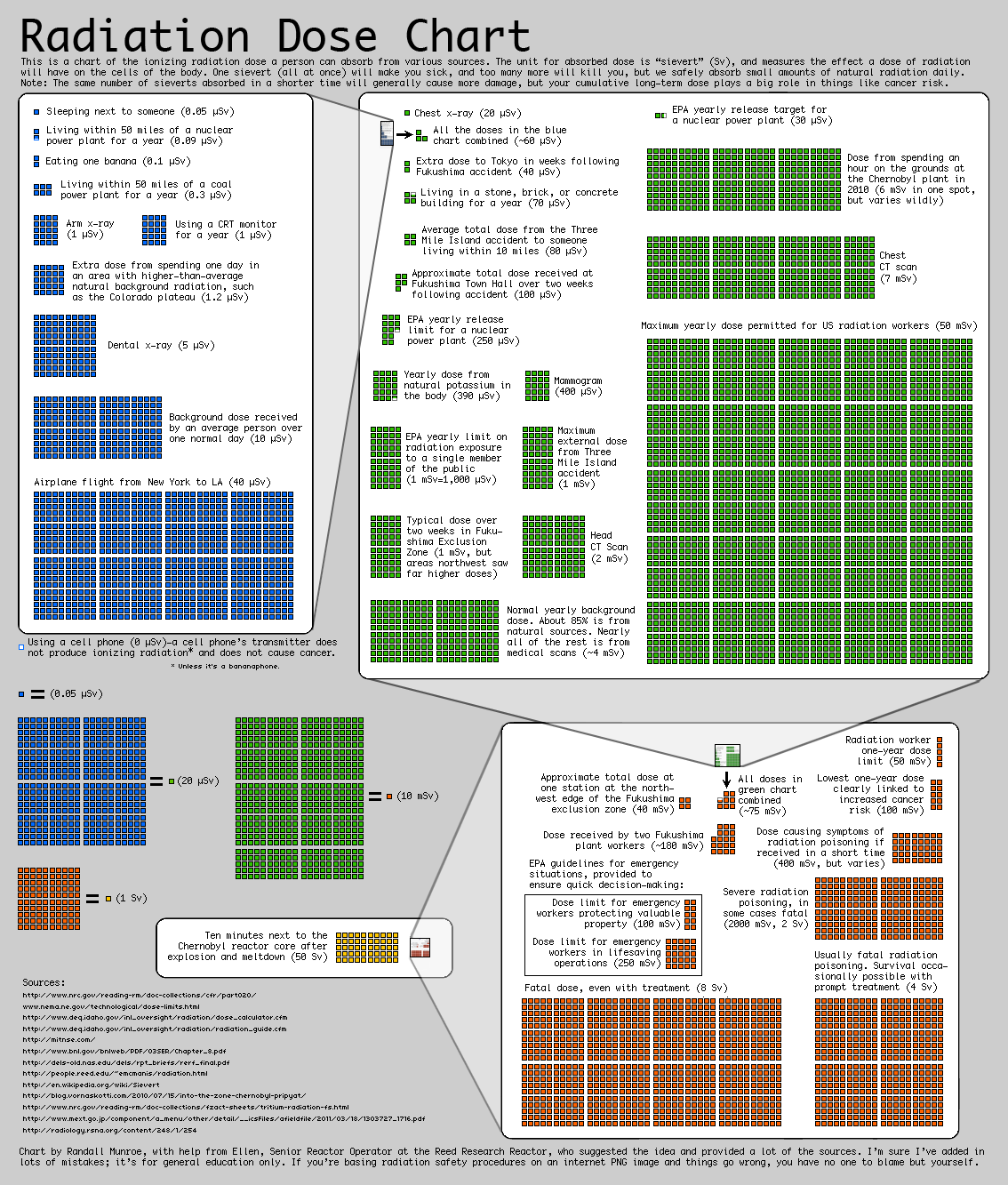



 A Thinking Person, a.k.a. Cogit8R